
Human hair extensions have a rich and fascinating history, reflecting centuries of beauty standards, technological advancements, and cultural significance. What started as a symbol of wealth and status has evolved into a widely accessible fashion accessory, transforming how people express themselves through their hair. Let’s dive into the journey of human hair extensions from ancient civilizations to the modern day.
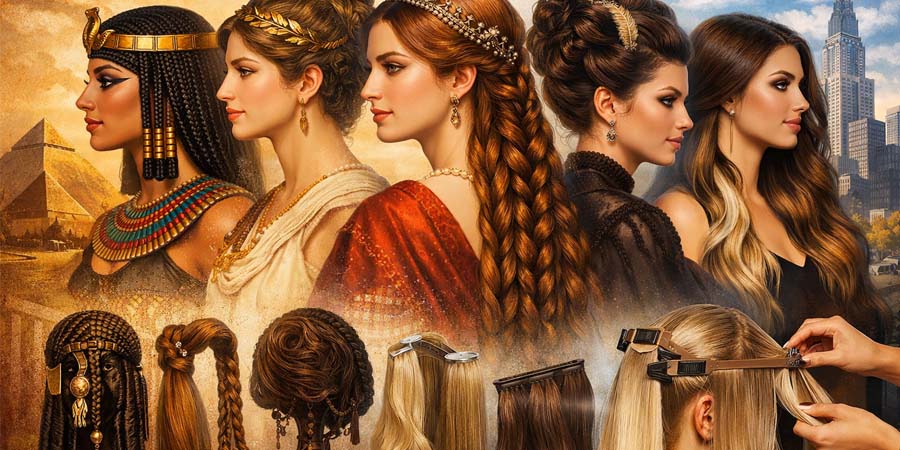
The earliest evidence of hair extensions dates back to ancient Egypt around 3400 BC. Egyptian men and women, especially the upper class, adorned themselves with wigs and hairpieces made of human hair, plant fibers, and sheep’s wool. These extensions were not merely for beauty but also held social and religious significance. Wearing elaborate hairstyles signified wealth, power, and a connection to the gods. The wigs were often dyed in black or dark brown, and some were even adorned with gold and beads to highlight their opulence.
Other ancient civilizations, such as the Romans and Greeks, also used hair extensions, but they were often limited to the elite. For Romans, blond hair extensions sourced from Northern Europe were particularly prized, symbolizing a connection to foreign beauty ideals.
During the Middle Ages in Europe, the use of hair extensions declined due to changing social and religious views on vanity and excessive grooming. Modesty became the focus, and elaborate hairstyles were less emphasized in favor of simple, covered looks. However, among the wealthy, wigs and hairpieces were still used, albeit with less fanfare than in ancient civilizations.
The Renaissance marked a resurgence of elaborate hairstyles. The European elite, especially in Italy and France, began using hairpieces to create voluminous and intricate hairstyles. In the 16th and 17th centuries, Queen Elizabeth I of England popularized red wigs and extensions, further sparking interest in hairpieces across European courts.
By the Baroque period, hair extensions became a symbol of aristocracy. The towering powdered wigs and hairpieces, seen in portraits of French royalty like King Louis XIV, became iconic. These wigs, though often made from horsehair or synthetic materials, sometimes incorporated human hair to achieve natural, full looks.
The 19th century saw a shift toward more natural and understated hair trends. Hairpieces were still used but in a less conspicuous manner. Women of the Victorian era used hair extensions to enhance their natural locks, often in the form of “switches” or “chignons.” These hair additions allowed women to style their hair in the fashionable updos of the time.
Interestingly, women often collected their own hair, which had fallen out naturally, to create these extensions. The hair trade also became prominent, with hair being sourced from poorer communities and sold to the wealthy.
The 20th century revolutionized the hair extension industry, thanks to innovations in technology and changing beauty standards. In the early 1900s, women embraced shorter hairstyles, and the demand for hair extensions briefly waned. However, by the mid-century, long, voluminous hair came back into style, and so did hair extensions.
In the 1950s and 1960s, celebrities like Brigitte Bardot and Audrey Hepburn made glamorous hairpieces popular once again. The introduction of synthetic fibers made hair extensions more affordable and accessible, expanding their use beyond the elite. This period also saw the rise of the beauty industry, with salons and professionals offering new methods of attaching and styling hair extensions.
By the 1990s, human hair extensions started gaining traction due to the demand for more natural-looking and long-lasting solutions. The advent of new application methods such as weaves, clip-ins, and bonding techniques revolutionized how people could wear hair extensions. Celebrities like Jennifer Lopez and Beyoncé helped popularize long, flowing locks, making human hair extensions a sought-after beauty item.
The global hair trade also boomed during this time. Hair sourced from countries like India, China, and Brazil became popular for its quality and texture.
Today, human hair extensions are a multi-billion-dollar global industry. With advancements in manufacturing, women and men of all backgrounds can now access high-quality extensions that suit various textures and lengths. There’s also a shift toward ethical sourcing, with brands focusing on fair-trade practices and ensuring the hair is ethically collected.
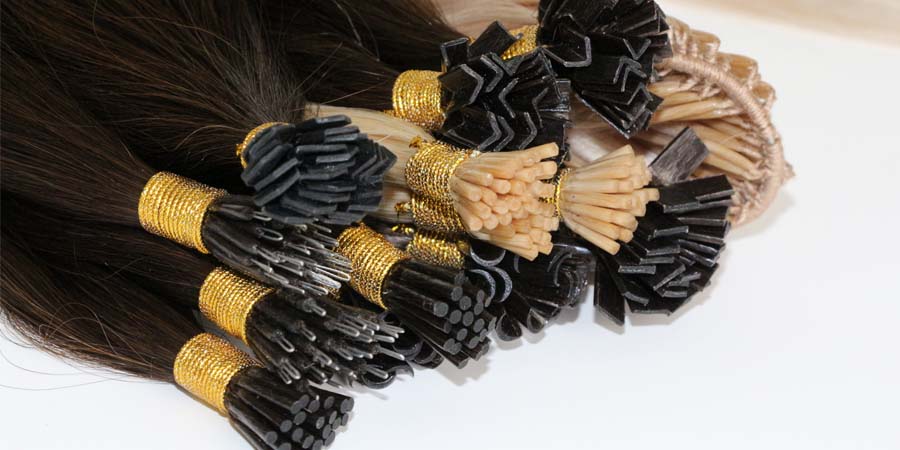
Moreover, hair extensions have become a form of self-expression. From vibrant colors to protective styling, people use them to enhance their natural beauty or experiment with different looks. Modern techniques such as tape-ins, micro-link extensions, and seamless clip-ins have made it easier than ever for individuals to achieve their desired hairstyles without damaging their natural hair.
The history of human hair extensions is a testament to the ever-changing nature of beauty and fashion. From their roots in ancient Egypt to the diverse, globally sourced extensions of today, these hairpieces have evolved alongside societal trends and technological advancements. As the industry continues to grow, with more ethical and sustainable practices emerging, human hair extensions will likely remain a vital part of the beauty landscape for years to come.

 © 2009 Qingdao Kingshow International Co., Ltd.


